Machine builders and plant engineers often face the same conflict: control must react faster while networks, data logging and diagnostics place more work on the CPU. YOKOGAWA FA-M3 and FA-M3V address that pressure with modular hardware, rapid ladder execution and an architecture intended to keep control predictable as system duties grow.
What Makes the YOKOGAWA FA-M3 / FA-M3V Series Different?
FA-M3 is YOKOGAWA's modular programmable controller family, while FA-M3V is the high-speed Vitesse generation developed around the company's IPRS concept: instruction, processing, response and scan. Its Vitesse Engine accelerates ladder execution, and the Parallel & Independent Processing System, or PIPS, separates ladder processing from peripheral work. In practice, the platform is aimed at users who need fast response without allowing communication, file handling or engineering activity to disturb the control sequence. The family is configured from CPUs, bases, power supplies, digital and analog I/O, temperature, positioning and communication modules rather than purchased as one fixed controller.

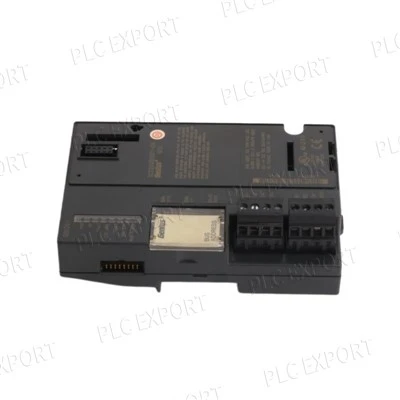
A representative modular arrangement combining power, CPU, I/O and network functions for machine or process automation.
What Drives Faster Execution?
FA-M3V uses the Vitesse Engine to shorten ladder execution. F3SP71 and F3SP76 CPUs are documented with basic-instruction execution from 3.75 ns, while a 100 μs minimum scan and 10 μs sensor-control-block resolution support short-cycle sequencing, inspection and registration tasks.
Why Does Timing Stay Stable?
PIPS processes the ladder program and peripheral activity independently and in parallel. This matters when an HMI, host computer, FTP transfer or diagnostic session is active, because additional traffic is less likely to create an unexpected delay in the machine-control path.
How Does the System Expand?
Four-, five-, six-, nine-, thirteen- and sixteen-slot bases allow the rack to match the cabinet and I/O count. Engineers can combine discrete, analog, temperature, pulse, positioning and communications functions while keeping a common modular architecture for expansion and spares.
Where Can FA-M3 / FA-M3V Deliver Practical Control Value?
FA-M3 / FA-M3V can be evaluated wherever rapid sequences, modular I/O and communication duties must work together. Four relevant project profiles are precision electronics assembly, renewable-energy and utility skids, packaging and batch production, and automated test systems with traceability. Final suitability still depends on the selected CPU, module mix, operating environment and lifecycle requirements.


How Can Engineers Select, Maintain, and Troubleshoot FA-M3 / FA-M3V?
Selection should begin with the complete CPU and module suffix, installed firmware, WideField3 project, base, power supply, I/O map and communication duties. Processing speed is only one part of the decision. Program capacity, device use, scan target, network traffic, storage, spare availability and lifecycle status must all be checked against the real machine. YOKOGAWA also maintains an end-of-sale list for older FA-M3 and e-RT3 items, so replacement planning should start before a failed part creates an emergency.
Who Should Consider F3SP71-4S?
Projects needing up to 60K ladder steps, a 120K-step project and 4,096 I/O points can evaluate F3SP71-4S. Capacity should include room for diagnostics, future sequences and communication changes rather than matching today's project exactly.
When Is F3SP76-7S the Better Fit?
Applications approaching 260K ladder steps, a 520K-step project, 8,192 I/O points or much larger device memory should examine F3SP76-7S. The complete suffix and supported software release still need verification.
How Should a Migration Be Verified?
Record addresses, interrupts, direct-I/O instructions, communications and scan-dependent logic, then convert and test the real project on a representative rack. A catalog-number similarity is not proof of drop-in compatibility.
How Can Heavy Ethernet Traffic Be Prevented from Delaying Control?
PIPS reduces interference by separating ladder and peripheral processing, but engineers should still limit unnecessary polling, schedule large FTP transfers, review HMI update rates and test the worst-case traffic load. Stable architecture does not replace network discipline.
Why Is an FA-M3 I/O Module Not Updating Correctly?
Check base and power capacity, slot assignment, field voltage, common wiring, module status, configured type, refresh method and program interlocks. For remote I/O, verify link parameters and addressing before replacing hardware, because configuration and wiring faults often imitate a failed module.
How Can Maintenance Recover a Controller Without Extending Downtime?
Applicable CPUs offer SD-card batch and front-panel maintenance functions. Prepare recovery media from a controlled master, document the switch sequence and test restoration on spare hardware. An unverified backup can turn a short outage into a lengthy commissioning exercise.
What Information Prevents the Wrong FA-M3 Spare from Being Ordered?
Provide the full catalog number and suffix, hardware revision, firmware, installed base, module list, quantity, destination and delivery requirement. Clear front and side label photos reduce confusion between similar CPUs, I/O versions and coated variants.
Conclusion: How Should Buyers Approach the FA-M3 / FA-M3V Series?
Buyers should treat FA-M3 / FA-M3V as a complete control architecture rather than a CPU-speed comparison. The strongest result comes from matching the exact processor, base, power, I/O, network and software combination to measured timing and capacity requirements, then proving the design on representative hardware. This approach preserves the platform's advantages in speed, stability and extensibility while reducing the pain of incompatible spares, rushed migrations and unexplained communication delays.
How Can Myrtle Help Confirm Your FA-M3 / FA-M3V Configuration?
Send the complete catalog number, firmware, module list, quantity and destination for compatibility and quotation support.